


AMSAT新闻服务
ANS-298 2026年10月25日
在本版中:AMSAT青年计划被报道在佛罗里达州的新闻上
* 埃米纳兹-2卫星成功获取了OSCAR编号
* 空间究竟从何开始呢?
猎鹰9号火箭成功发射了Bandwagon-5共享任务卫星
* 由希腊制造的小型卫星被发射用于哈萨克斯坦的学校
圣地亚哥的气球发射活动吸引了许多高中生参与OsTrax现已在Windows、macOS和Ubuntu操作系统上提供使用。
2026年10月23日,AMSAT TLE分配表的变更情况
* ARISS SSTV 活动正在进行中
* 阿里斯新闻
* AMSAT大使活动
来自AMSAT新闻服务各站点的卫星短讯,是AMSAT——业余无线电卫星公司提供的免费每周新闻和信息服务。ANS发布有关太空业余无线电领域的新闻,包括世界各地业余无线电爱好者们的活动报道。这些爱好者们热衷于设计、制造、发射模拟和数字式业余无线电卫星,并通过这些卫星进行通信。
在https://www.amsat.org上的新闻推送栏目会及时发布与太空业余无线电相关的新闻,这些新闻一旦由我们的志愿者们完成报道后就会立即被发布出来。
如果您有关于业余卫星的新闻或报道,请发送至:ans-editor [at] amsat.org。您可以通过ANS列表免费订阅AMSAT新闻服务的电子报;如需加入该列表,请访问:https://mailman.amsat.org/postorius/lists/ans.amsat.org/
AMSAT青年计划在佛罗里达州的新闻中被报道
这篇报道发表于2026年10月12日,发表在美国佛罗里达州盖恩斯维尔的《Main Street Daily News》上,标题为“阿拉丘阿县的两所学校开发出由学生自主设计的技术,用于与卫星通信”。
阿拉丘县的两所学校正在开发基于实践的科学、技术、工程和数学课程,这些课程可以让学生们有机会与绕地球运行的卫星进行通信,甚至可能与国际空间站上的宇航员进行交流。
在位于杰克逊维尔举行的第44届业余无线电卫星协会年会上,当地教育工作者戈登·吉比于10月9日向与会者介绍了这些学校的相关成果。根据北佛罗里达业余无线电俱乐部发布的新闻稿,盖恩斯维尔基督教社区学校和学生摇滚学校的学生们正在学习构建卫星跟踪系统以及与航天器进行无线电通信所需的技能。
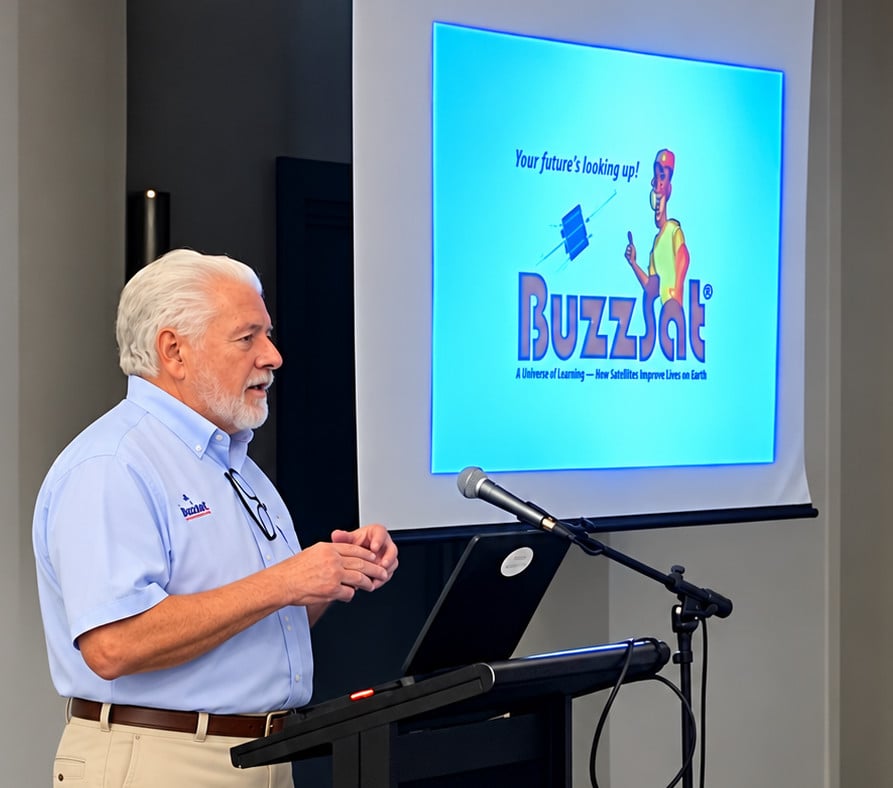
弗兰克·卡纳乌斯卡斯,N1UW,AMSAT的发展部副总裁,负责青少年教育项目。他介绍了该组织为青少年提供的免费学习资料。(照片由北佛罗里达业余无线电俱乐部提供。)AMSAT是一个非营利性的志愿组织,致力于推动业余无线电卫星技术的发展与教育普及。该组织的资源和活动使得卫星通信成为学生们学习的好机会。
盖恩斯维尔基督教社区学校正在扩展其技术课程。在GCCS学校,数学老师约翰·塞帕拉为16名学生授课,这些学生主要处于中学阶段。他所使用的教材是由该校自行开发的,涵盖了广泛的实际技术应用内容。
该课程涵盖了用于维护家庭及交通工具的各种系统和技能,包括电力、电子学、3D打印技术、小型发动机、管道工程、业余无线电通信以及计算机技术等方面的内容。
塞帕拉正在准备参加那些获得联邦通信委员会业余无线电执照所需的考试。他的许多学生也计划考取执照,这样他们就能参与无线电通信实验和卫星操作等活动了。
在罗克学校,10名高中生组成了一个业余无线电卫星俱乐部。这些学生分成了六个小组,正在开发一种机器人天线控制系统,以及一台专门用于追踪和通信低地球轨道卫星以及国际空间站的无线电台。
这个项目结合了电子学、机械工程、计算机编程以及制造技术。学生们正在组装一个机器人控制板,学习如何焊接电子元件,并准备使用3D打印机来制造用于天线升降和旋转机制的齿轮。
未来的计划包括使用铝制桅杆、U型螺栓以及高增益天线来构建天线支撑系统。学生们还在独立学习那些获得业余无线电执照所需的考试内容。
“这真是令人兴奋啊!”学校的学术顾问莱西·巴斯福德在新闻发布会上说道。学生们决定不购买现成的天线旋转控制器,而是自己使用 Arduino Nano微计算机和定制设计的印刷电路板来组装系统。他们将采用一位美国业余无线电操作员编写的开源软件,自行制造机械部件并组装整个系统。
该项目将整合数学、电子学、软件工程和机械设计等领域的内容,让学生能够了解这些学科如何在实际系统中协同工作。吉比希望这两所学校最终能够准备好通过国际空间站上的业余无线电项目来开展无线电联系。这一国际性教育项目通过业余无线电技术,让学生们能够与宇航员进行交流。
如果被选中的话,学生们就有机会通过无线电联系,向国际空间站上的工作人员提问。这一过程需要提交一份教育计划、进行技术准备,并经过正式选拔。目前,这两所学校的项目都还处于初步发展阶段。
为与航天器进行通信做准备,不仅仅是学习如何操作无线电设备。学生们还需要了解轨道运动、无线电波的传播方式、天线的方向选择、电子学相关知识,以及在与高速移动的航天器保持可靠通信联系时所面临的挑战。
在杰克逊维尔会议上,参与者们展示了一个模拟器,该模拟器能够模拟小型业余无线电卫星的运行情况。这个模拟器可以再现卫星无线电系统中的各种现象,包括当卫星靠近或远离地面站时,信号频率发生的多普勒频移现象。
该设备能够模拟多种类型的业余无线电卫星的功能,包括处理数字数据、重复语音传输以及中继摩斯电码等。该模拟器可以帮助学生学会识别并补偿卫星信号在移动过程中产生的多普勒频移现象,从而在信号频率发生变化时仍能保持通信畅通。这种学习体验将课堂上的物理知识与实际卫星通信工程挑战结合起来。
超越国际空间站:此次会议还邀请了工程师兼地质学家弗兰克·鲍尔发表演讲。鲍尔担任ARISS组织的执行董事,他介绍了该组织在促进与国际空间站之间的教育性无线电联系方面所做的工作,以及该组织在人类太空飞行未来规划方面的贡献。
与未来的空间站以及月球设施进行通信,可以为学习无线电技术的学生提供长期的灵感来源。AMSAT的副总裁Frank Karnauskas还介绍了AMSAT为年轻人开发的教育材料。
对于阿拉丘亚县的学生们来说,当前的目标是建立一座能够正常运作的卫星跟踪站、获得业余无线电执照,以及为开展ARISS通讯活动奠定必要的技术和教育基础。
其他学校可用的资源
根据发布的消息,吉比表示,这些项目可以作为其他学校在STEM课程中引入实用工程技术和空间通信技术的范例。在志愿者的支持下,借助开源软件、价格合理的微型计算机以及学生自己制作的组件,学校可以提供有意义的技术体验,而无需完全依赖昂贵的商业系统。
对于有兴趣参与业余无线电卫星通信以及ARISS教育活动的学校来说,可以通过当地的业余无线电应急服务网站获取相关资源。该网站的链接为:https://www.nf4rc.club/ariss-satellite-resources/。
[ANS感谢佛罗里达州盖恩斯维尔的《Main Street Daily News》给予我们重新发布这篇文章的许可。原文链接为:https://www.mainstreetdailynews.com/education/alachua-county-schools-develop-student-built-technology]
ERMINAZ-2卫星成功接收到了OSCAR编号数据
由德国AMSAT-DL团队制造的三颗Qubes卫星于10月1日通过SpaceX的Falcon 9火箭从加利福尼亚州的范登堡太空军基地发射升空。这些卫星分别命名为ERMINAZ-2V、-2U和-2X,携带了预先存储好的图像数据以及数字通信载荷。目前,这三颗卫星中有两颗已被正式命名为OSCARs——即“搭载业余无线电设备的轨道卫星”。
出乎意料的是,UARX OSSIE-D太空拖船的部署时间竟然是在2026年10月2日11:48 UTC。这真是一个巨大的惊喜,因为UARX之前曾表示,这种部署情况通常会在发射后7到31天内发生,而不会提前。更糟糕的是,AMSAT-DL团队直到10月3日晚才得知这一消息,因此他们错过了两天的数据收集和分析机会,因为当时没有人能够及时接收这些信息。后来,UARX解释说,这种提前的部署是由于技术方面的问题导致的。
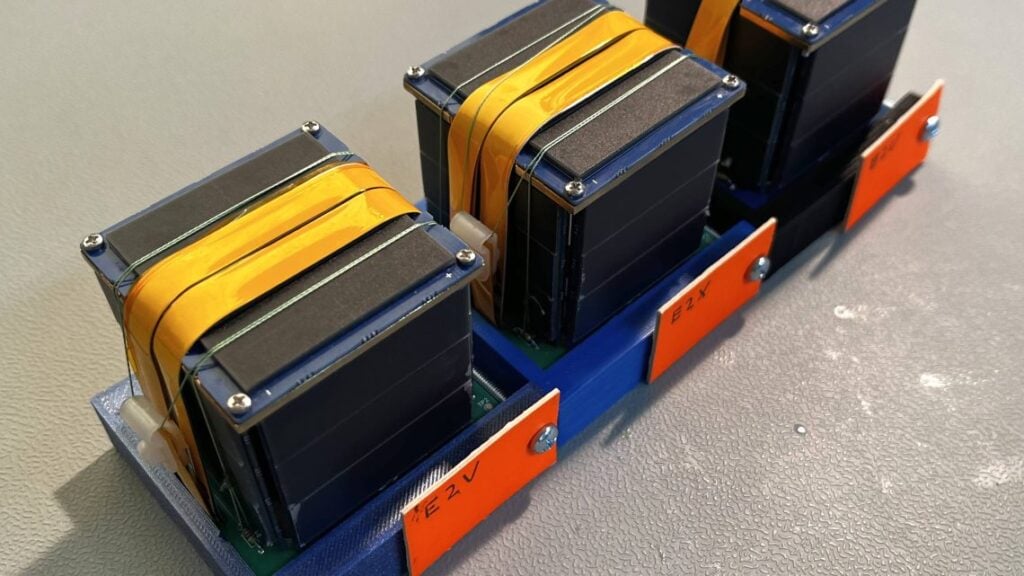
来自AMSAT-Deutschland的PocketQubes ERMINAZ-2V、ERMINAZ-2X和ERMINAZ-2U在10月1日发射前就已经准备就绪。(图片来源:AMSAT-DL)不过,ERMINAZ-2U和ERMINAZ-2V目前仍然处于正常运行状态。10月23日,AMSAT的总裁兼OSCAR事务主管Drew Glasbrenner发表声明称:“应AMSAT-DL的要求,AMSAT决定将ERMINAZ-2U和ERMINAZ-2V指定为AMSAT-OSCAR 129(AO-129)和AMSAT-OSCAR 130(AO-130)。我们祝贺AMSAT-DL,感谢他们为业余卫星社区做出的贡献,并祝愿他们在今后的项目中取得更大的成功。”遗憾的是,ERMINAZ-2X目前仍无法使用。可能是因为在部署过程中出现了故障,或者是在部署之后就发生了故障。由于部署后错过了重要的时间节点,因此具体的故障原因尚不清楚。
该团队已经对ERMINAZ-2U卫星(AO-129)进行了多项测试,其中包括激活了卫星上的数据接收装置。详情请参阅:https://amsat-dl.org/en/erminaz-2-satellites-are-transmitting-their-first-signals
[ANS感谢AMSAT-Deutschland e.V.的主席Peter GülzowDB2OS,以及AMSAT的负责人兼OSCAR数字管理员的Drew GlasbrennerKO4MA提供了上述信息。]
空间究竟从何开始?
没有一条界限能够完全划分出空间与时间的边界。这种界限会逐渐模糊,就像沙滩在靠近大海的地方逐渐湿润一样。直到某一点上,你真的身处水中,而此时就没人能确切地说出这一转变究竟发生在什么时候了。所以,空间的边界其实并不是任何人都能发现的。它是一种人们自己选择出来的边界,而不同的人会选择不同的边界。
几十年来,这种分歧几乎没给任何人带来什么损失。但现在情况开始发生变化了。旅游火箭带着付费乘客飞入争议区域,然后返回地面。高超音速军事飞行器也穿越该地区。究竟哪个数字才是正确的,这个问题已经演变成了关于宇航员飞行、门票销售,甚至主权领空的问题。
三个数字
这个著名的“100公里线”是区分航空纪录与航天纪录的基准线。世界航空运动记录机构FAI就使用这条线来划分不同领域的纪录。尼古拉·贝伦德在2023年的一次报告中指出,这一标准是由一群科学家在1960年制定的,其中包括西奥多·冯·卡门。他们之所以选择这条线作为分界线,是为了明确区分航空领域和航天领域的纪录。而“卡曼线”这个名称则更早由安德鲁·G·哈利在1957年与卡门讨论后提出。所以,这100公里的距离其实是一种具有历史意义的纪录标准。
The American figure is 50 miles, about 80 kilometres. The US Air Force used it for its astronaut wings, and the Federal Aviation Administration used the same threshold for the commercial astronaut wings it handed out until it ended that programme after 2021. In 2005 NASA gave civilian astronaut wings to three X-15 pilots, retired NASA pilot Bill Dana and the families of the late John B. McKay and Joseph A. Walker, acknowledging “their flights above 264,000 feet altitude”. That is 50 miles. When those flights happened only the military had wings to hand out, so civilian pilots flew just as high and got no badge. Dana’s first flight into space took him 58.13 miles above the Mojave Desert on 1 November 1966.
The legal figure does not exist. The 1944 Chicago Convention gives every state complete and exclusive sovereignty over the airspace above its territory. The 1967 Outer Space Treaty says outer space is not subject to national appropriation. Neither treaty says where one ends and the other begins, a gap a 2017 briefing to the UN space committee’s legal subcommittee lays out plainly. The committee has had the item on its agenda since 1966. Inside it the USSR repeatedly proposed 100 or 110 kilometres and the United States rejected any definition at all. The subcommittee’s 2026 draft report still carries “Matters relating to the definition and delimitation of outer space”, sixty years on.
物理学的研究结果表明……
The scientific answer depends on what question is actually being asked. Kármán himself was blunt about this. In 1961 lectures quoted in the FAI presentation he said that where atmosphere ends and space begins “is a judiciary rather than a scientific problem,” and he proposed a range, 300,000 to 400,000 feet, roughly 91 to 122 kilometres, rather than a line. The 100 kilometre figure was a round number inside that range.
Jonathan McDowell, an astronomer who has worked at the Harvard-Smithsonian Center for Astrophysics, made the satellite case in a 2018 paper in Acta Astronautica, “The edge of space: Revisiting the Karman Line”, free to read on arXiv. He looked at the orbits of real satellites. An elliptical orbit whose lowest point sits at 100 kilometres can survive for long periods. A satellite whose lowest point drops below 80 kilometres is “highly unlikely to complete its next orbit”. That lowest point is the perigee. McDowell argues that this makes roughly 80 kilometres a useful boundary.
Two other things happen to land in the same place. Meteors, moving much faster than satellites, usually break apart somewhere in the 70 to 100 kilometre range, a sign that the atmosphere starts to bite there. The mesopause, a boundary layer in the upper atmosphere, lies in the same broad region, though its height varies with latitude and season and is not fixed at 80 kilometres. McDowell also notes that 80 kilometres falls within 500 metres of the old 50-mile astronaut wings line. Those are separate ideas that land in roughly the same place. He suggests adopting exactly 80 kilometres as a better convention, one that fits what satellites actually do.
为什么这20公里如此重要呢?
On 11 July 2021 Richard Branson flew on Virgin Galactic’s Unity 22 to an apogee of about 86 kilometres. Nine days later Jeff Bezos flew on Blue Origin’s New Shepard past 100. Two days before Branson’s flight, Blue Origin posted that New Shepard was designed to fly above the Kármán line “so none of our astronauts have an asterisk next to their name”. By McDowell’s number, and by the US number, Branson’s passengers went to space. By the FAI’s, they did not. Virgin Galactic has kept selling tickets in that gap ever since, even through its current pause in flights while it builds its next ships. The dispute is no longer about an X-15 pilot’s badge. It is about what a company can truthfully print on a brochure.
The military version is less visible and more serious. For a vehicle passing over another country at 90 kilometres, an agreed boundary could help determine whether it had entered sovereign airspace. Neither an astronaut-wings rule nor an air sports convention settles that question. Nor would being in space put a weapon beyond the law: the Outer Space Treaty says activities there are carried out in accordance with international law, including the UN Charter. An agreed boundary could clarify the sovereignty question, although it would not by itself settle the legality of a weapon’s passage or use. It is the piece that is missing.
[ANS thanks Space Daily and author Lachlan Brown for the above information. Read the full article at https://spacedaily.com/karman-line-100km-vs-50-miles/.]
已经是十月了!2026年总统俱乐部硬币的推出时间已经不多了!请帮忙支持高尔夫球和FoxPlus吧。
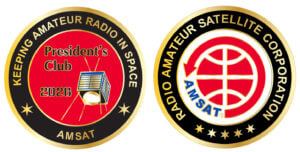
年度会员资格的费用仅为120美元。
Join the AMSAT President’s Club today and help Keep Amateur Radio in Space!
https://www.amsat.org/join-the-amsat-presidents-club/
Falcon 9 Launches Bandwagon-5 Rideshare Mission
Following on from the successful Transporter 18 mission at the beginning of the month, SpaceX’s Falcon 9 vehicle launched an additional 32 rideshare payloads for the Bandwagon-5 mission on Tuesday, Oct. 20, delayed by a day due to unfavorable recovery weather. Falcon 9 lifted off from Space Launch Complex 40 (SLC-40) at the Cape Canaveral Space Force Station in Florida. A one-hour launch window opens at 10:30 UTC, with the vehicle following a southeasterly trajectory to low-Earth orbit.
SpaceX’s Transporter and Bandwagon rideshare missions allow small satellite companies and government and educational institutions to launch payloads of up to 50 kg for $350,000, significantly cheaper than a full Falcon 9 launch. This offers a more affordable and straightforward route to space for many companies. Alongside the rideshare payloads, SpaceX is launching the second of its Starfall capsules, which is mounted atop the satellite stack.
SpaceX included its second Starfall capsule on the Bandwagon 5 mission. The disk-shaped reentry vehicle can remain in space indefinitely and can reenter and be recovered by SpaceX at any time. The capsule measures 3.1 m in diameter and 0.75 m in height, has a mass of 2,100 kg, and can carry up to 1,000 kg of payload. SpaceX will use the vehicle for point-to-point cargo delivery and for transporting goods manufactured in microgravity. SpaceX will ultimately launch the capsules aboard its super-heavy-lift Starship, with multiple capsules likely to launch aboard the vehicle at one time.
Exolaunch, a launch services and mission management provider, is manifesting 22 customer satellites on Bandwagon-5. Other payloads include multiple synthetic aperture radar (SAR) Earth observation satellites from ICEYE, two high-resolution SAR satellites from Capella Space, and two commercial SAR payloads from Umbra Space. SAR satellites use remote sensing to produce high-resolution imagery in any weather conditions, at any time of day. In addition to supporting military applications, SAR can also measure and observe Earth’s surface features in extreme detail.
[ANS thanks the NASASpaceflight for the above information. Read the full article at https://www.nasaspaceflight.com/2026/10/bandwagon-5/.]
LIMITED TIME OFFER!!!
AMSAT is offering a limited-time promotion for new and renewing members
that includes a free digital copy of Getting Started with Amateur Satellites.
The promotion is being offered as AMSAT begins the 2026 membership year.
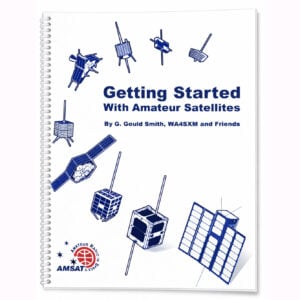
Anyone who joins or renews their AMSAT membership during the promotional period
will receive a download link for the latest edition of
Getting Started with Amateur Satellites in their membership confirmation email.
JOIN TODAY at https://launch.amsat.org/ (Remember! Students join for FREE!)
Greek-Built Satellite Launched for Kazakh School
It is past midnight in Kazakhstan when, 10,392 kilometres away, a SpaceX rocket lifts off through dense morning fog from Vandenberg Space Force Base in California carrying a satellite payload.
Despite the late hour, some children in Kazakhstan’s capital Astana remain wide awake with excitement. The following day, the rocket will deploy an orbital system carrying a tiny Greek-built satellite on their behalf.
Measuring just 5 x 5 x 5 centimetres — roughly the size of a Rubik’s Cube — the satellite was developed in Athens by programmers and engineers at the non-profit Libre Space Foundation (LSF).
Founded by nine people in 2015, LSF develops open-source space technology and designs. It now employs around 25 people, about one-quarter of them women, as well as young people undertaking internships. The organisation has so far sent more than 10 microsatellites, nanosatellites and picosatellites into space.
One of its picosatellites launched on October 1 for a school in Astana, the capital and second-largest city of Kazakhstan.
LSF was surprised when Kazakhstan’s Space Agency approached it directly after learning about its work at international conferences.
“They wanted an estimate of how much a ‘pocket-class’ satellite would cost for use in a school in Kazakhstan,” LSF vice president Eleftherios Kosmas told the Athens-Macedonian News Agency (AMNA).
He said Kazakhstan appeared keen to gradually develop an independent space programme but had a limited budget, so officials decided to start with a school.
LSF initially provided an engineering model designed only for laboratory testing and used it to train the students. It then built the satellite that eventually launched into orbit.
“As the father of a young girl, I understand how these children feel now that something of their own is travelling through space,” Kosmas said. The students will also be able to communicate with the satellite and observe how a ground station receives its signal under different signal configurations.
The SpaceX rocket that launched during the early hours of October 1-2 carried more than the tiny school satellite. It transported eight satellites in total, all of which carried the LSF’s signature in one way or another.
Four additional SIDLOC picosatellites — part of a system for identifying and locating satellites and other space objects — were registered as Greek satellites.
Three others belonged to AMSAT Deutschland, the German Amateur Radio Satellite Association. They used LSF’s open-source software and designs to build their own pocket satellites.
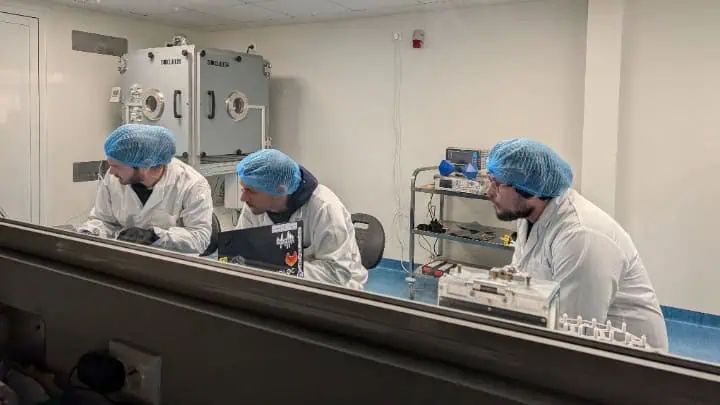
LSF staff work in the clean room in Athens, Greece. (Photo credit: Greek City Times.) Until a few years ago, LSF operated from Abatiellou Street in Athens, in a former printing house that once produced maps.
The organisation has since moved to Lenorman Street, near the Plato Academy, where it has again taken over a former printing facility.
The new premises house the organisation’s offices as well as a clean room, where temperature, pressure, humidity and cleanliness remain under controlled conditions.
The facility allows LSF to assemble circuit boards destined for space while protecting them from microscopic particles of dust that could compromise their operation.
[ANS thanks the Greek City Times and author Kosta Papadopoulos for the above information. Read the full article at https://greekcitytimes.com/2026/10/08/greek-space-technology-sends-kazakh-school-into-space/.]
AMSAT Remove Before Flight Key Tags Now Available
Yes, These are the Real Thing!
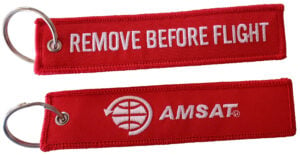
Your $20 Donation Goes to Help Fly a FoxPlus Satellite
Includes First Class Postage (Sorry – U.S. Addresses Only)
Order Today at https://www.amsat.org/product/amsat-remove-before-flight-keychain
San Diego Balloon Launch Draws in High School Students
Members of the Mt. Carmel High School Amateur Radio Club in San Diego, California, used a high-altitude balloon launch October 17 to generate interest among their fellow students and the community in amateur radio, science, technology, engineering and math. Members of the public were encouraged to track the balloon flight in real time using an app called Sondehub-Amateur, which displays telemetry from amateur radio high altitude balloon launches.
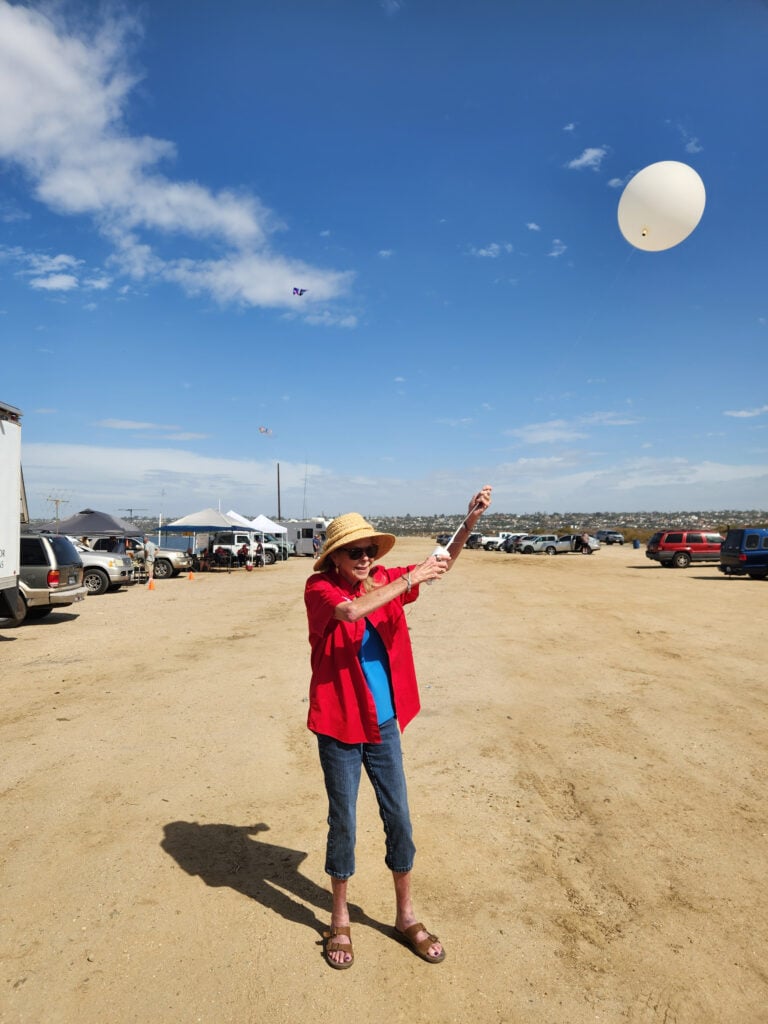
Gayle Olson, K6GO, holding the weather balloon that would carry her call sign to an altitude of more
than 17 miles from its launch at the San Diego Repeater Association’s Hamtastic event on October 17.
[Photo courtesy of Gayle Olson, K6GO] This flight, which carried the call sign K6GO, belonging to Gayle Olson, a volunteer for the ARRL Foundation Scholarship Committee and Maxim Society member, flew to an altitude of 17-1/2 miles before the balloon burst and the payload parachuted back to the ground in Julian, California, some 60 miles inland from its launch point on Fiesta Island.
The launch was part of the San Diego Repeater Association’s annual “Hamtastic” event, which brings together hams and clubs from throughout the region to get on the air, socialize, and demonstrate amateur radio to the public. The San Diego Repeater Association is an ARRL Affiliated Club.
[ANS thanks The ARRL Letter for the above information.]

OsTrax Now Available for Windows, macOS, and Ubuntu
Avinstar, LLC has announced the general availability of OsTrax, an orbiting satellite tracking and operating platform for Windows, macOS and Ubuntu.
Satellite communication presents one of the more interesting and involved opportunities using radio. The need to know when and where a satellite is at a given time, while carefully coordinating radios and antennas to communicate using the satellite presents many challenges.
OsTrax addresses these challenges by incorporating a fresh, modern approach combined with a central satellite information repository to eliminate problems associated with obtaining accurate and timely satellite information. The result is more operating time with less effort.
OsTrax is user customizable to create a personalized operating experience with full control of satellite selection and satellite pass control.
OsTrax controls radios and antenna rotors based on the requirements of a satellite pass and communication type. Radios and rotor selections extend from legacy to current.
Automatic updating of orbital elements and satellite profile information ensure the latest operating information is always available.
User defined orbital elements and satellite profiles provide access opportunities for new or exploratory satellites and features.
OsTrax enhances operating with simplified contact logging and advanced tools to determine future satellite pass predictions and perform satellite pass modeling.
In addition to satellite tracking, OsTrax tracks the Sun and Moon with antenna rotor control.
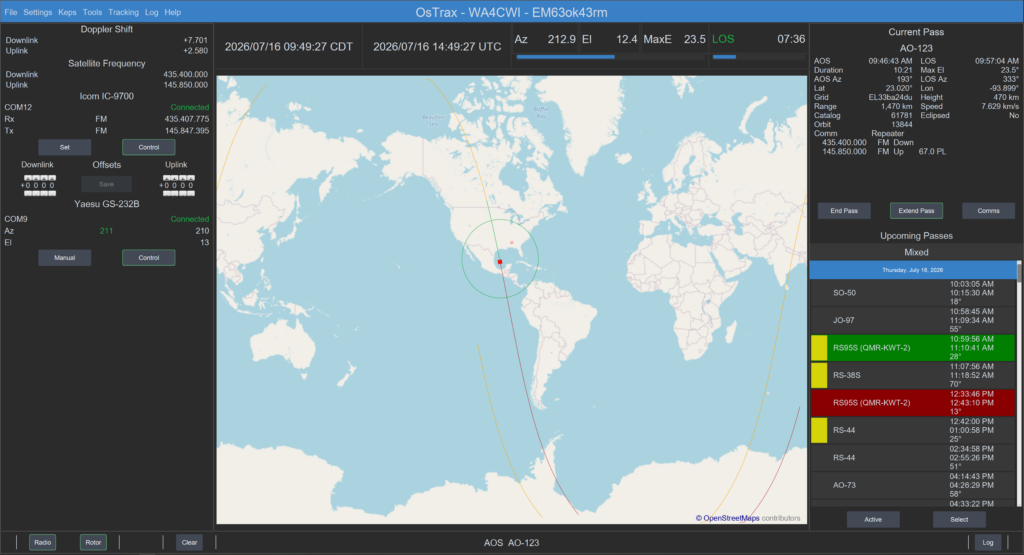
(Image credit: Jim McCullers, WA4CWI) Publication images are available at https://www.avinstar.com/ostrax/media/images The User Guide can be viewed at https://www.avinstar.com/ostrax/docs A fully functional trial license is available for 15 days for each operating system version.
For more information, please view the OsTrax web site at https://www.ostrax.com or contact Jim McCullers at jmccullers@avinstar.com.
OsTrax was created by Jim McCullers, WA4CWI, an Extra Class amateur radio operator licensed since 1961. OsTrax combines his interest and experience in satellite operation with his professional programming experience. He is the developer of SigTrax, the signal tracking toolkit available on the Apple App Store for iOS devices and the Google Play Store for Android devices.
[ANS thanks Jim McCullers, WA4CWI, for the above information.]
Changes to AMSAT TLE Distribution for Oct. 23, 2026
Two Line Elements or TLEs, often referred to as Keplerian elements or keps in the amateur community, are the inputs to the SGP4 standard mathematical model of spacecraft orbits used by most amateur tracking programs. Weekly updates are completely adequate for most amateur satellites. TLE bulletin files are updated daily in the first hour of the UTC day. New bulletin files will be posted immediately after reliable elements become available for new amateur satellites. More information may be found at https://www.amsat.org/keplerian-elements-resources/.
Bulletin format elements for all satellites of interest to radio amateurs. This file is updated at least every 24 hours.
Bare elements are derived from the bulletin, but contain no header or footer. These data are used as input to the AMSAT Pass Predictions page.
This week there are no additions or deletions to the AMSAT TLE distribution.
General Perturbations Data Support
AMSAT is pleased to announce that modern forms of what are called General Perturbations data are being disseminated via modern formats including JSON, XML and KVN at https://newark192.amsat.org/gpdata/current/. The reason this change is being made is that we are running out of 5-digit catalog numbers and the TLE format is not viable for satellites launched after July of this year. See https://celestrak.org/NORAD/documentation/gp-data-formats.php for details.
These data are presently considered in beta test for the next two months while hosted on the test server newark192.amsat.org, and we are very open to community feedback at webmaster at amsat.org. Testers may experience outages and errors while we make improvements. We intend to put this into production on our main web server in July as we expect that satellites launched after this summer will require one of the new formats to accommodate longer object numbers. AMSAT will continue to publish TLE bulletins for satellites launched before July 2026 indefinitely.
[ANS thanks Joe Fitzgerald, KM1P, AMSAT Orbital Elements Manager, for the above information.]
ARISS SSTV Event in Progress
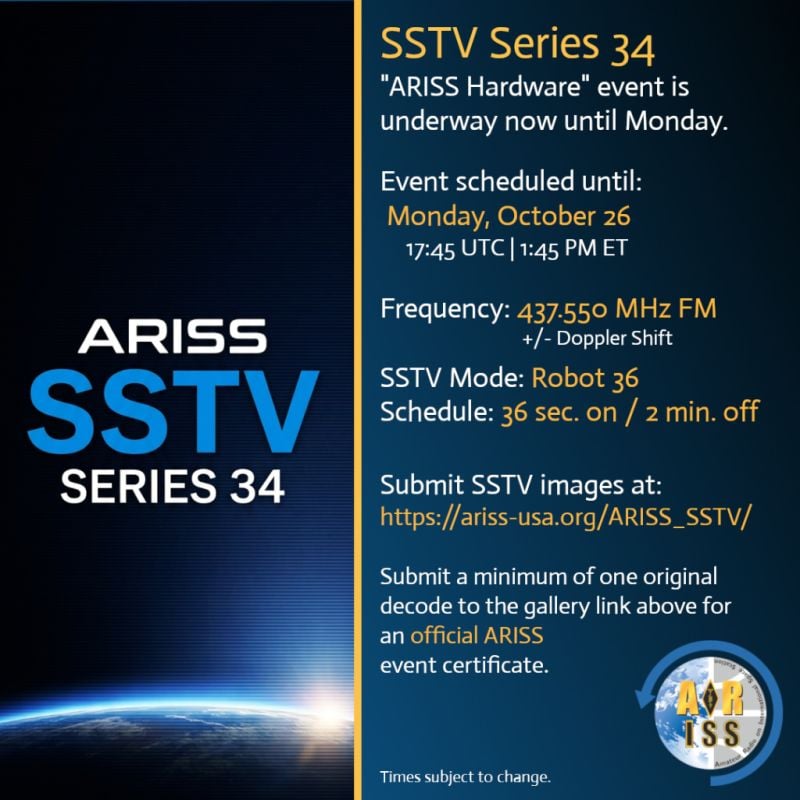
A series Slow-Scan Television (SSTV) transmissions from the International Space Station (ISS) is currently taking place, and will continue until Monday. Persons who upload images they have received to the SSTV gallery at https://ariss-usa.org/ARISS_SSTV/ will receive an event certificate. Because this activity does not involve transmitting to the ISS, but only receiving, no amateur radio license is required to participate. More information is available at https://ariss-usa.org/ARISS_SSTV/.
[ANS thanks the ARISS for the above information.]
Buying from DX Engineering?
Add AMSAT’s Getting Started With Amateur Satellites to your order.
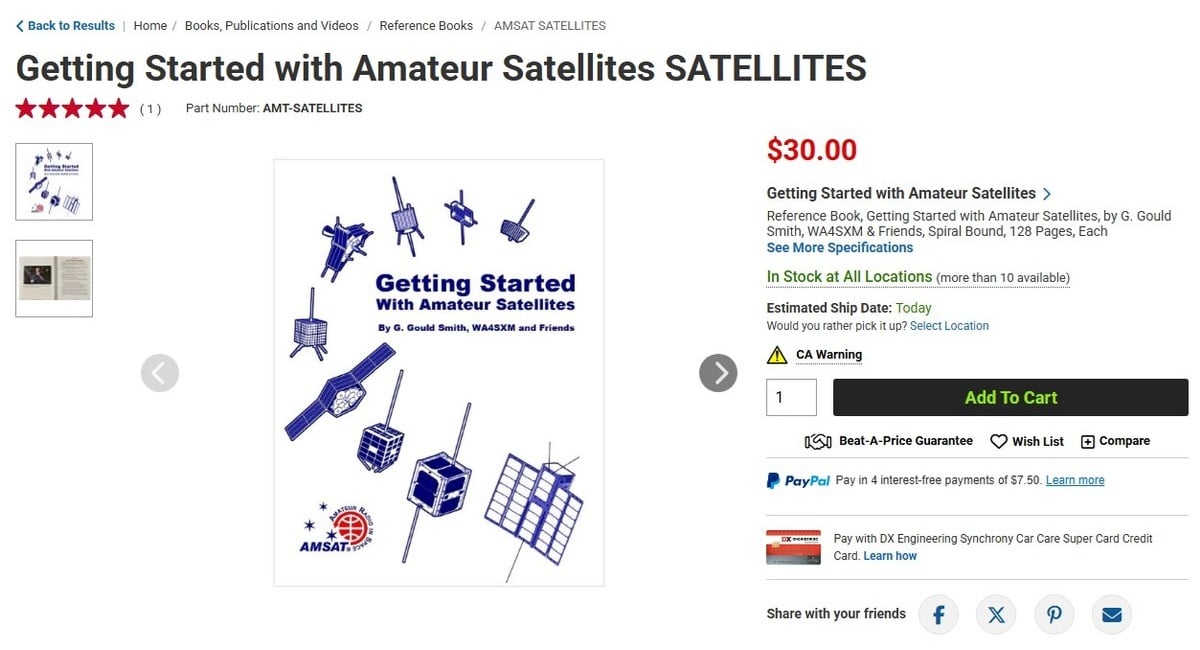
Available for $30 from DX Engineering (free shipping on most orders over $99)
https://www.dxengineering.com/parts/amt-satellites
ARISS News
Amateurs and others around the world may listen in on contacts between amateurs operating in schools and allowing students to interact with astronauts and cosmonauts aboard the International Space Station. The downlink frequency on which to listen is 145.800 MHz worldwide.
Recently Completed Contacts Sarasota Military Academy, Sarasota, FL, direct via W4SMA
The ISS callsign was scheduled to be NA1SS The scheduled crewmember was Luke Delaney, KJ5PPF
The ARISS mentors are KM4YHZ are W4NTR Contact was successful: Thu 2026-10-22 16:25:17 UTC 23 degrees maximum elevation
Watch for Livestream at https://www.facebook.com/SarasotaMilitaryAcademy/
Congratulations to the Sarasota Military Academy, Luke, mentors KM4YHZ and W4NTR, and ground station W4SMA!
Upcoming Contacts Paul Duke STEM High School, Norcross, GA, direct via KN4SIE
The ISS callsign is presently scheduled to be NA1SS The scheduled crewmember is Joshua Kutryk, KJ5BFU
The ARISS mentor is K4RGK
Contact is go for Option #4: Mon 2026-10-26 13:11:42 UTC 39 degrees maximum elevation Smile Of The Child – Smile Academy, Attica, Greece, telebridge via AB1OC
The ISS callsign is presently scheduled to be OR4ISS The scheduled crewmember is Luke Delaney, KJ5PPF
The ARISS mentor is IKØWGF Contact is go for: Fri 2026-10-30 10:01:41 UTC 61 degrees maximum elevation
Watch for possible Livestream at:
Greek https://www.hamogelo.gr/gr/el/ta-nea-mas/to-chamogelo-tou-paidiou-sindeei-mathites-me-ton-diethni-diastimiko-stathmo-iss/
English https://www.hamogelo.gr/gr/en/ta-nea-mas/to-chamogelo-tou-paidiou-sindeei-mathites-me-ton-diethni-diastimiko-stathmo-iss/ ********************************** Many times, a school makes a last-minute decision to do a Livestream or runs into a last-minute glitch requiring a change of the URL, but we at ARISS may not get the URL in time for publication. You can always check https://live.ariss.org/ to see if a school is Livestreaming.
As always, if there is an EVA, a docking, or an undocking; the ARISS radios are turned off as part of the safety protocol.
Also, some of the activities listed below are suspended until the completion of the SSTV event currently underway (see article above).
The crossband repeater remains configured in the Columbus Module (145.990 MHz up {PL 67} & 437.800 MHz down). If a crewmember decides to pick up the microphone and turn up the volume, you may hear them on the air—so keep listening, as you never know when activity might occur.
Kenwood D710GA in the Zvezda Service Module – Call sign RSØISS. Please note we’re still in the process of troubleshooting and testing this radio. APRS is currently active on 437.825 MHz. Feel free to check out status reports at https://ariss-usa.org/ARISS_APRS/.
Ham TV is currently transmitting a test signal at 2395.00 MHz. For more information, see https://live.ariss.org/hamtv/ Note, all times are approximate. It is recommended that you do your own orbital prediction or start listening about 10 minutes before the listed time.
The latest information on the operation mode can be found at https://www.ariss.org/current-status-of-iss-stations.html The latest list of frequencies in use can be found at https://www.ariss.org/contact-the-iss.html [ANS thanks Charlie Sufana, AJ9N, one of the ARISS operation team mentors for the above information]
Give Your Next Rove a Payload — Put Your Lunch into Orbit!
Pack the rover dogs and hit the grid line with an all-new
AMSAT Round Logo Metal Lunchbox.
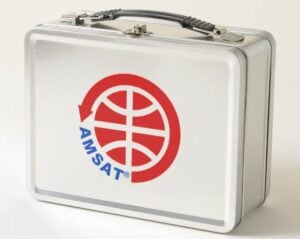
Keep Amateur Radio in Space — and your lunch in the box!
https://www.zazzle.com/amsat_round_logo_metal_lunchbox-256761530568368967
AMSAT Ambassador Activities
AMSAT Ambassadors provide presentations, demonstrate communicating through amateur satellites, and host information tables at club meetings, hamfests, conventions, maker faires, and other events.
November 7, 2026 JARSfest (Johnston Amateur Radio Society Hamfest)
The Farm at 95 215 Batten Rd. Selma, NC 27576 https://jars.net/jarsfest-2026
KF4EAG November 14, 2026
Southern Arizona Fall Hamfest
Oro Valley Amateur Radio Club Marana Middle School 11285 W. Grier Rd.
Marana AZ https://www.tucsonhamradio.org/hamfest
N1UW 
Interested in becoming an AMSAT Ambassador? AMSAT Ambassadors provide presentations, demonstrate communicating through amateur satellites, and host information tables at club meetings, hamfests, conventions, maker faires, and other events. For more information go to: https://www.amsat.org/ambassador/ [ANS thanks Bo Lowrey, W4FCL, Director – AMSAT Ambassador Program, for the above information]
Satellite Shorts from All Over
+ A Russian satellite just took a very close look at an American spacecraft in low Earth orbit. The snooping satellite, Kosmos 2612, rendezvoused with ICEYE-X36, a commercial craft that observes our planet using synthetic aperture radar (SAR). The close encounter, which occurred between Oct. 15 and Oct. 19, was reported by Marco Langbroek and other satellite trackers, with Langbroek calling it “a worrisome cat-and-mouse game” in orbit. The rendezvous has garnered a lot of attention in space circles, because it was non-consensual and startlingly close; at one point, the two spacecraft may have been separated by just a few meters. There are about 80 ICEYE spacecraft in LEO at the moment. At least some ICEYE satellites provide imagery to Ukraine, which Russia invaded in February 2022 and continues to assault with ground troops and missile and drone attacks. (ANS thanks Space.com for the above information. See the full story at https://www.space.com/space-exploration/satellites/russian-satellite-plays-cat-and-mouse-with-a-commercial-us-satellite-likely-used-by-ukraine-but-why-the-risky-close-encounter.) + NASA finally released its Request for Proposals (RFP) for the next phase of its Commercial LEO Destinations (CLD) program on October 9, about ten days later than promised. The CLD is the program to replace the International Space Station (ISS) with a privately developed orbiting platform. Seeking proposals from industry by December 8, the agency said it would select at least two companies by next April for initial awards to continue work on their stations, with at least one later selected for full development. Companies developing commercial space stations have an array of challenges to overcome, from the ongoing NASA competition to securing outside investment and non-NASA customers to the technical issues of building a commercial space station. (ANS thanks The Space Review for the above information. Read the full story at https://www.thespacereview.com/article/5340/1.) + The space around Earth is turning into a junkyard. Researchers think a refundable deposit scheme could force satellite operators to clean up their act before a tipping point is reached. In a paper published last month in the journal Nature Communications, a group of scientists propose a scheme that would require satellite operators to post a bond of $200,000 before launch, refundable with interest upon the completion of a successful deorbit. Companies that fail to remove their junk would lose the money, which could go toward a shared pool funding active debris-removal missions. (ANS thanks Space.com for the above information. Read the full story at https://www.space.com/space-exploration/satellites/could-satellite-deorbit-deposits-prevent-a-space-debris-disaster.) + Online marketplace eBay has imposed new restrictions on listings of radio transmitting equipment in response to new FCC rules that took effect last week, but responded to ARRL, The National Association for Amateur Radio®, that its new policy will not apply to gear that operates exclusively on amateur radio frequencies. The FCC’s rules are intended to use its equipment authorization program to protect against “national security threats to the communications supply chain” and cover a wide variety of products. However, in response to a request from ARRL for a clarification relating to amateur radio equipment that does not require FCC authorization, an eBay spokesperson indicated that the marketplace will not restrict sales of equipment that does not require an FCC ID. Amateur radio equipment, except for commercial HF amplifiers, continues to not require FCC authorization. (ANS thanks ARRL for the above information. Read the full story at https://www.arrl.org/news/ebay-restricts-listings-of-radio-equipment-but-exempts-ham-band-only-gear.)
Join AMSAT today at https://launch.amsat.org/
In addition to regular membership, AMSAT offers membership to:
- Societies (recognized groups, clubs or organization).
- Students are eligible for FREE membership up to age 25.
- Memberships are available for annual and lifetime terms.
Contact info [at] amsat.org for additional membership information.
73 and remember to help Keep Amateur Radio in Space!
This week’s ANS Editor, Mark Johns, KØJM
mjohns [at] amsat.org ANS is a service of AMSAT, the Radio Amateur Satellite Corporation, 712 H Street NE, Suite 1653, Washington, DC 20002. AMSAT is a registered trademark of the Radio Amateur Satellite Corporation.
来源:AMSAT 业余卫星组织 原文:查看原文 (本文由本站自动翻译整理,版权归原作者及原发布机构所有,仅供学习交流,如涉版权请联系我们删除。)

即可将本文分享给好友或朋友圈